
Bugs, Bees and Butterflies
Growing up in Kent, we sometimes uncovered the big plump white grubs of the Stag Beetle, curled up in a C when moving rotting dead wood. We rarely saw the impressive males with the huge mandibles or jaws with projecting spurs. Growing to 2-3 inches long, these magnificent creatures fly like insect jumbo jets during May to August.

The Great Stag Hunt by PTES for stag beetles kicked off earlier in June 2025, now aligning with National Insect Week, which is this week 23–29 June. Insect Week (formerly called National Insect Week) is an annual celebration in the UK organised by the Royal Entomological Society (RES) with over 60 partner organisations with interests in the science, natural history and conservation of insects. Soon to be followed by The Big Butterfly Count in July/August.
Why all the publicity?
Declining insect populations are a cause for global concern because insects play vital roles in our ecosystem, including pollination, pest control, and nutrient recycling, which are essential for food production and maintaining biodiversity. Their decline could lead to significant disruptions in these processes, impacting both human and environmental well-being.
Stag beetles (Lucanus cervus) are the UK’s largest land beetle and are considered Nationally Scarce. Their populations have declined significantly. Your sightings help PTES and researchers map stag beetle populations across the UK. Also raising public awareness to the importance of dead wood, log piles, and creating wildlife-friendly gardens
Are you a ‘beeliever’? The theme for Insect Week is “Stand Tall for the Small”, with a strong focus on insect decline and conservation efforts. Check out the website for more information https://www.insectweek.org/
“Stag Weekend” events
Spot & record stag beetles. Watch for them at dusk in warm gardens, parks, hedgerows, orchards, or woodlands, especially in southern England. Submit sightings (including photos or larvae) via the PTES survey portal https://ptes.org/campaigns/stag-beetles-2/
Take up the opportunity to participate in Insect Week activities such as bug hunts, workshops, talks, citizen science, photography and art competitions https://www.insectweek.org/events/.
Get ready for the Big Butterfly Count. Download your free identification chart and join in between Friday July 18th and Sunday August 10th https://bigbutterflycount.butterfly-conservation.org/

Plants for Bugs
Our gardens are mini ecosystems. So by sowing seeds of plants that might encourage wildlife into our space we could improve our biodiversity. Debate has raged whether they should just be ‘native’ plants but we have imported species from all over the world, nearly 70 % of the flowers in our gardens are ‘non-native’. But do they serve our insect populations?
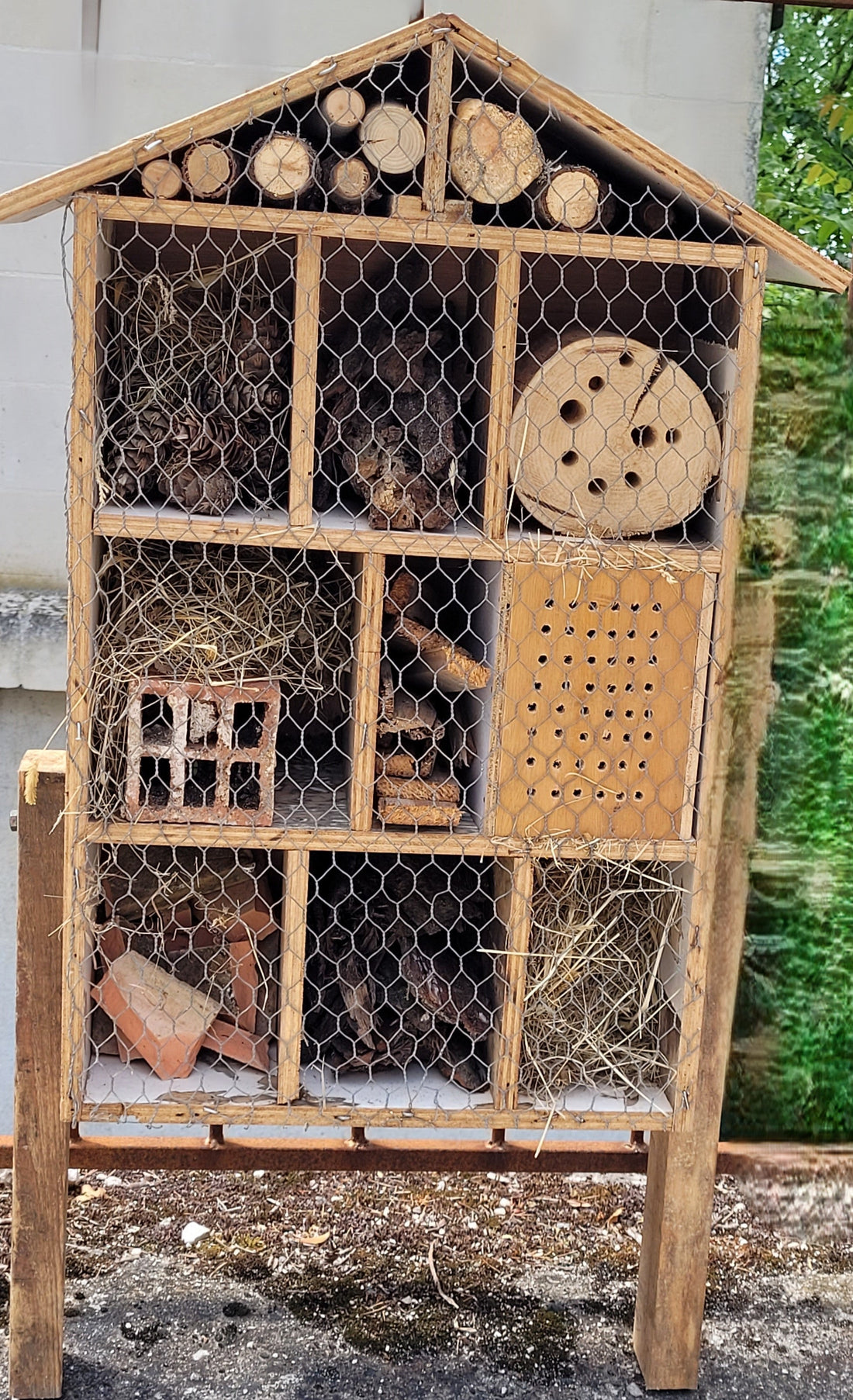
We need to provide sanctuary for our invertebrates, climbers such as clematis, honeysuckle and ivy provide living habitats. Although artificial ‘bug hotels’ work as well; tubes filled with hollow straws and corrugated cardboard.
A few suggestions for bug attracting plants from seed.
- Clematis montana; slow to germinate but flowers with a delicious scent
- Catmint; hardy perennial with grey green foliage and blue spikes attracting butterflies
- Coreopsis (tickweed); quick and easy to grow
- Echinacea purpurea (coneflower); highly attractive to butterflies and pollinating insects
- Lavender; nectar rich, irresistible to pollinators
- Marjoram; semi-evergreen perennial herb, beloved by bees and hoverflies
- Salvia; striking purple/blue flowers attract bees and butterflies
- Scabious; wildflower varieties or alternatively stunning garden strains
- Sedum; bushy perennial with major appeal to butterflies
- Thyme; grown primarily for culinary leaves, if left will flower profusely
- Verbena bonariensis; tall, willowy plant, will self seed
- Verbena rigida; perennial attractive to both bees and butterflies