


Quick Growing Facts
Product Description
English Bluebell Seeds – Hyacinthoides non-scripta
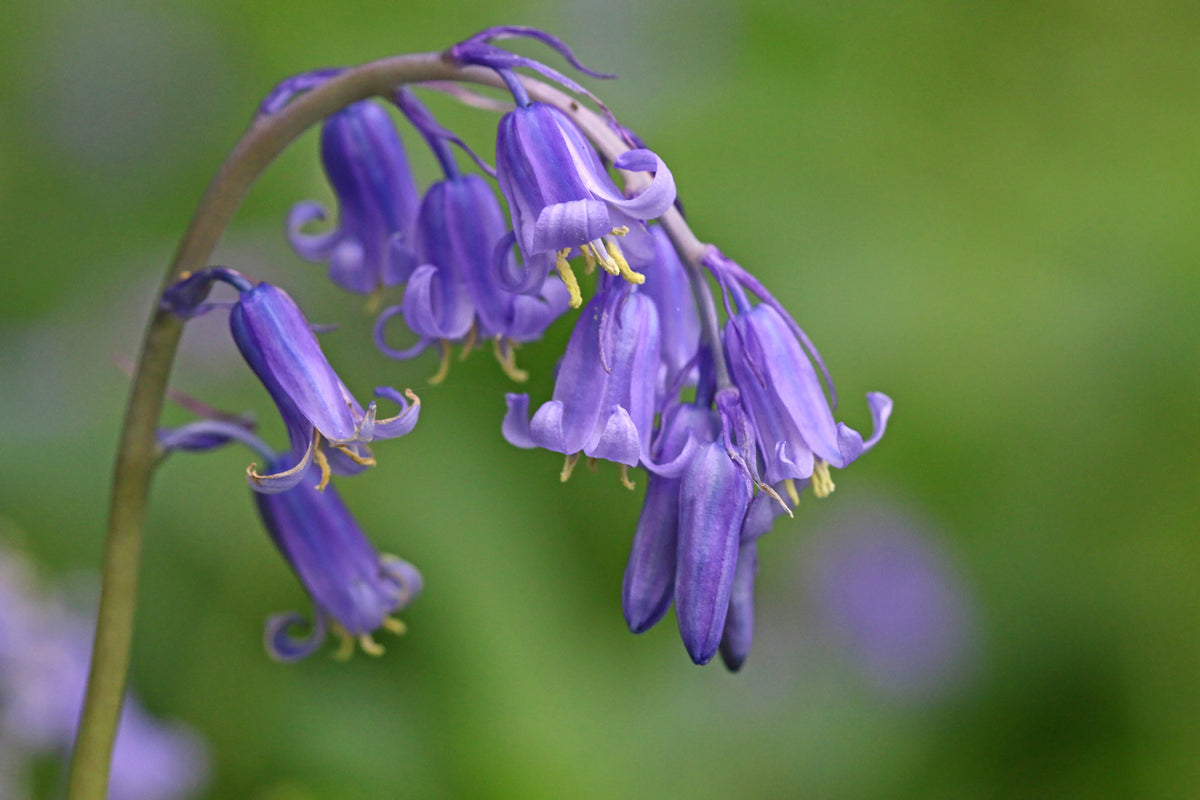
English Bluebell Seeds produce graceful, arching stems of fragrant, violet-blue, bell-shaped flowers that are a familiar sight in British woodlands during spring. Known botanically as Hyacinthoides non-scripta, this native British perennial is valued for its natural beauty and ability to establish gradually beneath deciduous trees and shrubs.
English Bluebell develops narrow, strap-like green leaves followed by slender flowering stems carrying clusters of nodding blue flowers, usually arranged along one side of the stem. Each flower has delicately curled-back petal tips and a sweet fragrance, creating the distinctive appearance associated with traditional British bluebell woods.
This hardy woodland perennial grows best in partial shade with humus-rich, moisture-retentive but well-drained soil. English Bluebells are particularly suitable for woodland gardens, shaded borders and naturalised planting beneath deciduous trees. Plants grown from seed establish slowly and may take several years to flower, but can gradually form attractive colonies in suitable conditions.
Key Features
Produces fragrant, violet-blue, bell-shaped flowers during spring.
Native British woodland perennial known botanically as Hyacinthoides non-scripta.
Graceful, arching flower stems with blooms usually arranged along one side.
Delicate flowers with distinctive curled-back petal tips.
Narrow, strap-like green foliage that dies back after flowering.
Plants typically grow approximately 20–40cm tall.
Suitable for woodland gardens, shaded borders and naturalised planting.
Provides an early-season nectar source for bees and other visiting insects.
Hardy perennial that can gradually establish colonies in suitable conditions.
Best grown from seed where a natural woodland display is wanted over time.
How to Grow English Bluebell Seeds
Sow English Bluebell Seeds during September to November in pots or trays filled with moisture-retentive but well-drained seed compost. Fresh seed can also be sown during summer after collection.
Sow seeds thinly onto the compost surface and cover lightly with approximately 3–5mm of fine compost or grit.
Water gently to settle the compost and place the containers in a cool, sheltered position outdoors, where they can experience natural seasonal temperature changes.
English Bluebell Seeds generally require a period of cold, moist conditions to help break dormancy. Natural winter temperatures are usually suitable, so artificial heat is not required.
Keep the compost lightly moist throughout winter, avoiding both complete drying and prolonged waterlogging.
Germination is often slow and irregular. Seedlings may begin appearing during spring, although some seeds can take considerably longer to germinate.
Once seedlings have developed, continue growing them in their original containers until they are sufficiently established to handle safely.
Young bluebells develop small bulbs beneath the soil. Avoid disturbing them unnecessarily during their early stages of growth.
Transplant established young bulbs into a partially shaded position with humus-rich, well-drained soil, preferably during their dormant period.
Allow approximately 10–15cm between plants when planting into woodland areas or shaded borders.
Water during prolonged dry periods while young plants establish, particularly during spring when they are actively growing.
English Bluebells grown from seed can take approximately 4–7 years to reach flowering size, depending on growing conditions.
Once established, allow the foliage to die back naturally after flowering so the bulbs can store energy for the following year.
English Bluebell Growing Tips
Choose partial shade beneath deciduous trees or shrubs.
Grow in humus-rich soil that retains moisture during spring.
Sow during autumn to provide natural winter chilling.
Avoid using artificial heat during germination.
Keep seed compost lightly moist without waterlogging.
Be patient, as germination and early growth can be slow.
Avoid disturbing young seedlings while their bulbs develop.
Allow foliage to die back naturally after flowering.
Leave established plants undisturbed to encourage natural colonisation.
Choose genuine native English Bluebells rather than Spanish Bluebells or hybrids when creating native woodland planting.
Frequently Asked Questions
Are English Bluebells native to Britain?
Yes, Hyacinthoides non-scripta is a native British woodland wildflower commonly found beneath deciduous trees and in established woodland habitats.
When do English Bluebells flower?
English Bluebells generally flower from April to May, depending on local weather and growing conditions.
How long do English Bluebell Seeds take to germinate?
Seeds normally require a period of cold, moist conditions before germinating. Seedlings may appear during spring following autumn sowing, although germination can be irregular and some seeds may take longer.
How long do English Bluebells take to flower from seed?
English Bluebells are slow-growing from seed and can take approximately 4–7 years to produce their first flowers.
Can English Bluebells grow in shade?
Yes, they are particularly suited to partial shade beneath deciduous trees and shrubs, where they receive spring light before the tree canopy develops fully.
What is the difference between English and Spanish Bluebells?
English Bluebells usually have slender, arching stems with fragrant flowers arranged along one side. Spanish Bluebells tend to have more upright stems, broader leaves and flowers arranged around the stem.
Will English Bluebells spread naturally?
Yes, established plants can gradually spread through seed production and bulb development, forming colonies over time in suitable conditions.
Are English Bluebells poisonous?
Yes, all parts of English Bluebells are poisonous if eaten. They should not be used as edible flowers and should be kept away from children and pets that may ingest them.
Can English Bluebells be grown in containers?
Yes, they can be grown in deep containers with suitable compost and good drainage, although they are generally better suited to naturalised woodland planting.
Perfect For
Woodland gardens
Native British wildflower planting
Shaded borders
Planting beneath deciduous trees
Naturalised spring displays
Wildlife-friendly gardens
Cottage gardens
Long-term woodland planting
Quality Seeds
Carefully selected for reliable results
Fast UK Delivery
Packed and dispatched with care
Gardening Expertise
Practical advice from experienced growers
Here to Help
Friendly support when you need it