

Quick Growing Facts
Product Description
Thai Basil Seeds
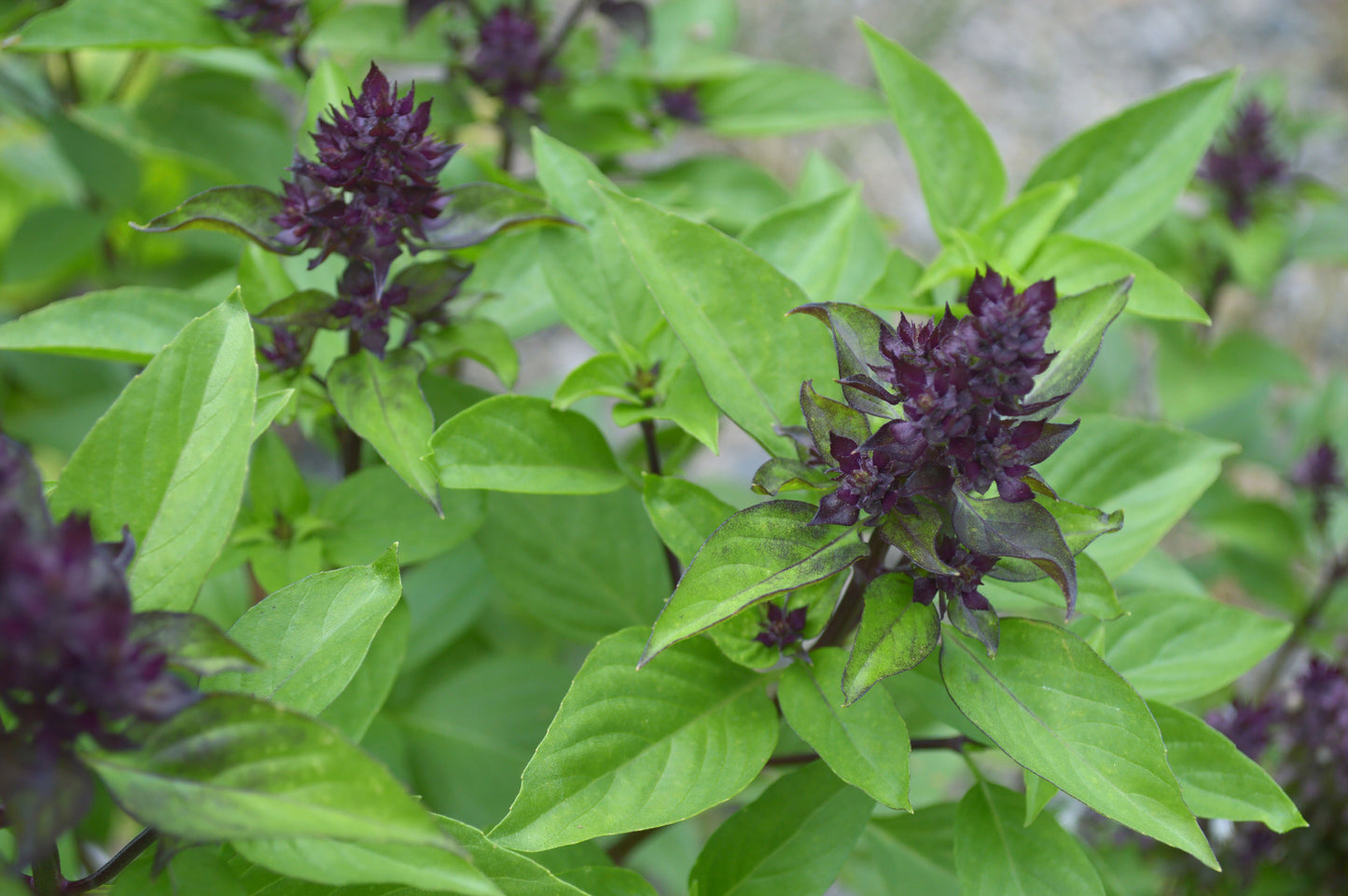
Thai Basil Seeds produce attractive plants with small, narrow green leaves, distinctive purple stems, and beautiful mauve to pink-purple flowers. This aromatic culinary basil has a characteristic liquorice-like flavour that makes it particularly useful for Asian-inspired cooking.
Thai Basil thrives in rich, well-drained soil in a warm and sheltered position. The leaves are best picked as required and used fresh for maximum flavour. Its colourful stems and flowers also make it an attractive addition to kitchen gardens, greenhouse displays, and sunny windowsills.
Pinching out the tip of the main stem encourages compact, bushy growth. Flower buds can also be removed if you want the plants to concentrate their energy on producing plenty of fresh leaves.
Key Features
Distinctive Thai Basil with a liquorice-like flavour.
Produces small, narrow aromatic leaves.
Attractive purple stems and mauve to pink-purple flowers.
Excellent for fresh culinary use.
Ideal for pots, windowsills, greenhouses, and kitchen gardens.
Can be grown alongside tomatoes as a companion plant.
Pinching out encourages compact, bushy plants.
How to Grow Thai Basil Seeds
Sow Thai Basil Seeds indoors from March, approximately 0.5cm deep in good-quality seed compost.
Several seeds can be sown together in each pot. Once established, plants can be potted on and grown on a bright kitchen windowsill or transferred into 1–2 litre pots for growing alongside tomatoes in the greenhouse.
Plants can be grown outdoors from late May, once all risk of frost has passed. Space plants approximately 30cm apart in rich, well-drained soil in a warm, sheltered position.
Alternatively, sow directly outdoors in drills during May once the soil has warmed, thinning seedlings to approximately 30cm apart.
Thai Basil can also be grown all year round on a bright windowsill, providing fresh aromatic leaves close to the kitchen.
Thai Basil Growing Tips
Grow in rich, well-drained soil in a warm, sheltered position.
Pick leaves regularly and use them fresh for the best flavour.
Pinch out the main growing tip to encourage bushier plants.
Remove developing flowers if you want to encourage continued leaf production.
Keep outdoor plants protected from frost and cold temperatures.
Grow in pots alongside greenhouse tomatoes as a companion plant.
Frequently Asked Questions
What does Thai Basil taste like?
Thai Basil has a distinctive aromatic flavour with a noticeable liquorice-like character.
What does Thai Basil look like?
Plants produce small, narrow leaves with attractive purple stems and mauve to pink-purple flowers.
Can Thai Basil be grown indoors?
Yes, it can be grown throughout the year on a bright kitchen windowsill.
When can Thai Basil be planted outdoors?
Plant outdoors from late May once the risk of frost has passed and conditions have warmed.
Should I pinch out Thai Basil?
Yes. Pinching out the main growing tip encourages bushy growth, while removing flowers can encourage continued leaf production.
Perfect For
Kitchen windowsills
Greenhouses
Patio containers
Asian-inspired cooking
Fresh herbs
Kitchen gardens
Companion planting
Home growers
Want more growing advice?
Read the full growing instructions, with practical advice and a few tips we’ve picked up from growing it ourselves.
Quality Seeds
Carefully selected for reliable results
Fast UK Delivery
Packed and dispatched with care
Gardening Expertise
Practical advice from experienced growers
Here to Help
Friendly support when you need it