

Product Description
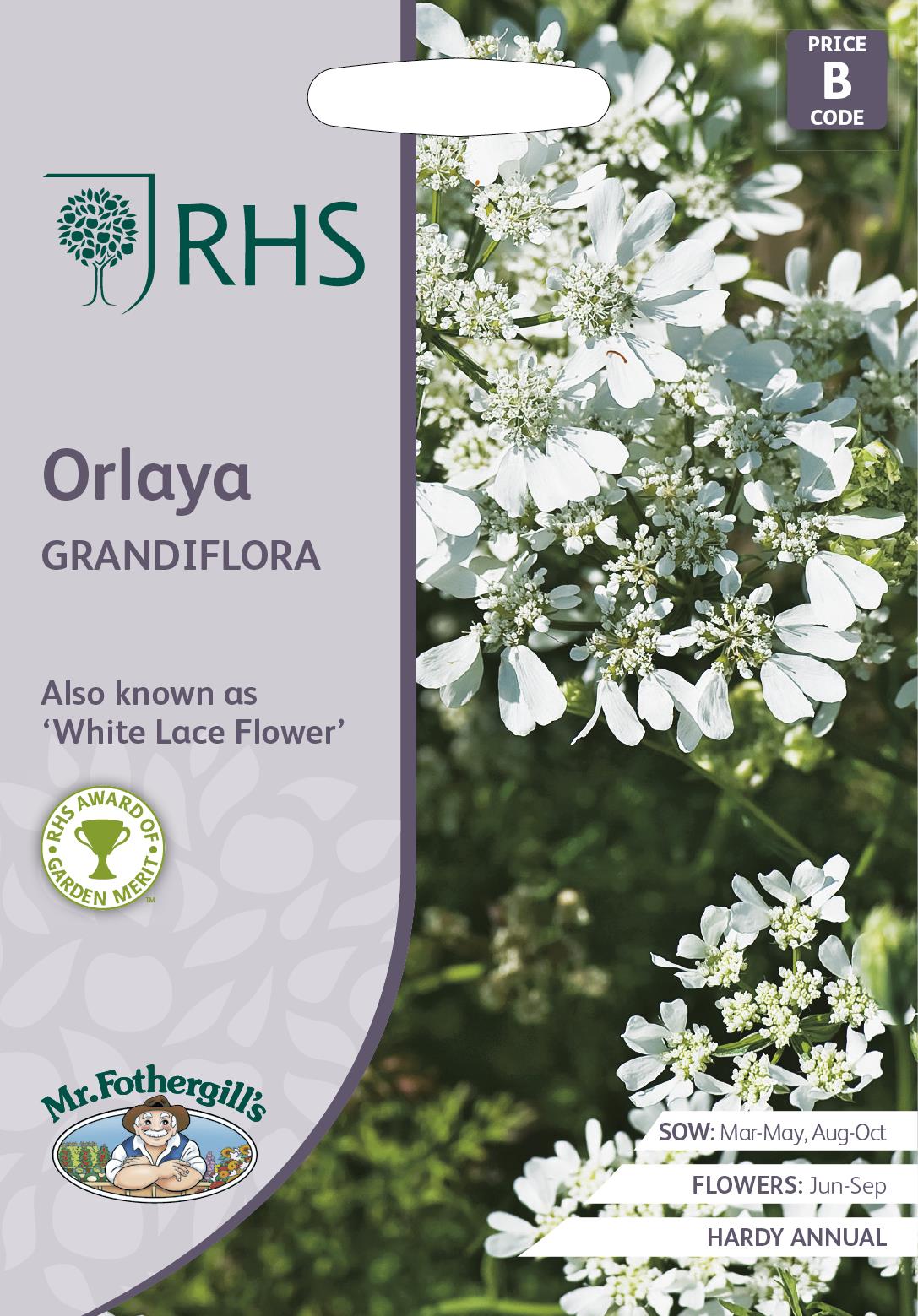
Orlaya grandiflora Seeds – White Lace Flower
Orlaya grandiflora Seeds produce delicate white flowers arranged in attractive, lace-like clusters. Commonly known as White Lace Flower, this hardy annual is valued for its long flowering period and finely divided blooms, which bring a soft, natural appearance to garden borders and cutting gardens.
Orlaya grandiflora produces distinctive flower heads with larger outer petals surrounding smaller central flowers. Its upright stems make it particularly useful for fresh flower arrangements, where the white blooms combine well with Cosmos, Cornflowers, Sweet Peas and other cottage garden favourites.
A recipient of the RHS Award of Garden Merit, Orlaya grandiflora is recognised for its garden performance. The flowers are also attractive to bees, hoverflies and other beneficial insects, making it a useful addition to pollinator-friendly planting schemes.
Key Features
Produces delicate white, lace-like flower clusters.
Commonly known as White Lace Flower.
Hardy annual suitable for borders and cutting gardens.
Recipient of the RHS Award of Garden Merit.
Flowers over a long period from June to September.
Attractive to bees, hoverflies and other beneficial insects.
Suitable for spring and autumn sowing.
Useful for cottage gardens and fresh flower arrangements.
How to Grow Orlaya grandiflora Seeds
Sow Orlaya grandiflora Seeds from March to April in trays or modules filled with good-quality seed compost. Alternatively, sow during September to October for overwintering and earlier flowering the following year.
For spring sowings, sow seeds thinly and cover with a fine layer of compost, approximately 3–5mm deep. Firm gently and keep moist.
Cover the seed tray with glass, polythene or a propagator lid and maintain a temperature of approximately 15–20°C.
Seedlings generally appear within 14–28 days. Remove the covering once seedlings begin to emerge.
When seedlings are large enough to handle, carefully transplant them into individual modules or space approximately 5cm apart in trays.
Orlaya develops a taproot and dislikes root disturbance, so sowing directly into individual modules or small pots is preferable where possible.
Gradually harden young plants off by placing them outdoors for a few days during late May, avoiding frost.
Plant into their final flowering position approximately 25cm apart, choosing a sunny position with well-drained soil.
For autumn sowings, grow young plants in a cold frame or unheated greenhouse, or protect established outdoor seedlings with cloches during winter. Autumn-sown plants can produce earlier, larger flowering displays the following spring.
Flowers generally appear from June to September, depending on sowing time and growing conditions.
Orlaya Growing Tips
Choose a sunny position with well-drained soil.
Use individual modules or small pots to minimise root disturbance.
Keep compost lightly moist during germination.
Harden spring-grown seedlings off before planting outdoors.
Autumn sow for earlier flowering the following year.
Protect autumn-sown plants from severe winter weather using cloches or a cold frame.
Remove faded flower heads regularly to prolong flowering.
Cut flowers regularly for fresh arrangements.
Allow selected flowers to set seed if you want to encourage natural self-seeding.
Frequently Asked Questions
What is Orlaya grandiflora commonly called?
Orlaya grandiflora is commonly known as White Lace Flower because of its delicate white flower clusters.
Is Orlaya grandiflora an annual or perennial?
It is a hardy annual that completes its life cycle in one growing season.
When should Orlaya grandiflora Seeds be sown?
Sow during March to April for summer flowering or September to October for overwintering and earlier flowers the following year.
Is Orlaya grandiflora suitable for cut flowers?
Yes, its delicate white flowers and upright stems make it useful for fresh bouquets and informal flower arrangements.
Does Orlaya grandiflora attract pollinators?
Yes, its flowers attract bees, hoverflies and other beneficial insects.
Can Orlaya be autumn sown?
Yes. Autumn sowing is particularly useful for producing earlier flowering plants. Young plants should be protected during severe winter weather.
Does Orlaya dislike transplanting?
Yes, it develops a taproot and can be sensitive to root disturbance. Individual modules or small pots are preferable to crowded seed trays.
Perfect For
Cottage gardens
Cut flower gardens
Fresh bouquets
Garden borders
Pollinator-friendly planting
White flower gardens
Autumn sowing
Naturalistic planting
Quality Seeds
Carefully selected for reliable results
Fast UK Delivery
Packed and dispatched with care
Gardening Expertise
Practical advice from experienced growers
Here to Help
Friendly support when you need it